Nazca Lines
How many Nazca Lines are there, and which ones can you see?
Hundreds of figures, thousands of lines and a few famous animals everyone wants to spot. Here is what is actually out there in the Nazca desert, which figures you see from the plane and where Palpa fits in.

In this article
It is the first question almost everyone asks before booking: how many Nazca Lines are there? The honest answer is that nobody has a final number, and that is part of the fun. Archaeologists are still mapping the desert, and new figures keep turning up.
What we can give you is a clear picture of what is out there, which figures are the famous ones, and which of them you will actually see from the window of a small plane. We fly over them every day, so this is the short version of what our pilots tell passengers on the ground.
So, how many Nazca Lines are there?
Think in the hundreds for figures and in the thousands for lines. The Nazca and Palpa desert holds three main kinds of geoglyphs, and each one is counted differently.
- Straight lines. The most numerous by far. Some run for kilometres across the plain, perfectly straight over hills and dry riverbeds. Counts in the literature run to several hundred long lines and well beyond a thousand if you include the short ones.
- Geometric shapes. Huge trapezoids, triangles, zigzags and spirals. The trapezoids are the ones that make the desert look like an old airfield from above.
- Figures (biomorphs). Animals, plants and human-like shapes. The classic list has around 70 large figures, the ones that appear on every map and postcard.
That classic list got a lot longer recently. In 2024 a research team from Yamagata University in Japan, working with the help of artificial intelligence, announced more than 300 newly identified figures. Most of them are small, faint relief figures near old footpaths, so they are hard to spot from a plane, but they doubled the number of known figurative geoglyphs almost overnight.
The whole area has been a UNESCO World Heritage Site since 1994, listed as the Lines and Geoglyphs of Nasca and Palpa. Most of the designs were made by the Nazca culture roughly 2,000 years ago, by removing the dark stones on the surface to expose the lighter ground underneath. No rain and very little wind did the rest.
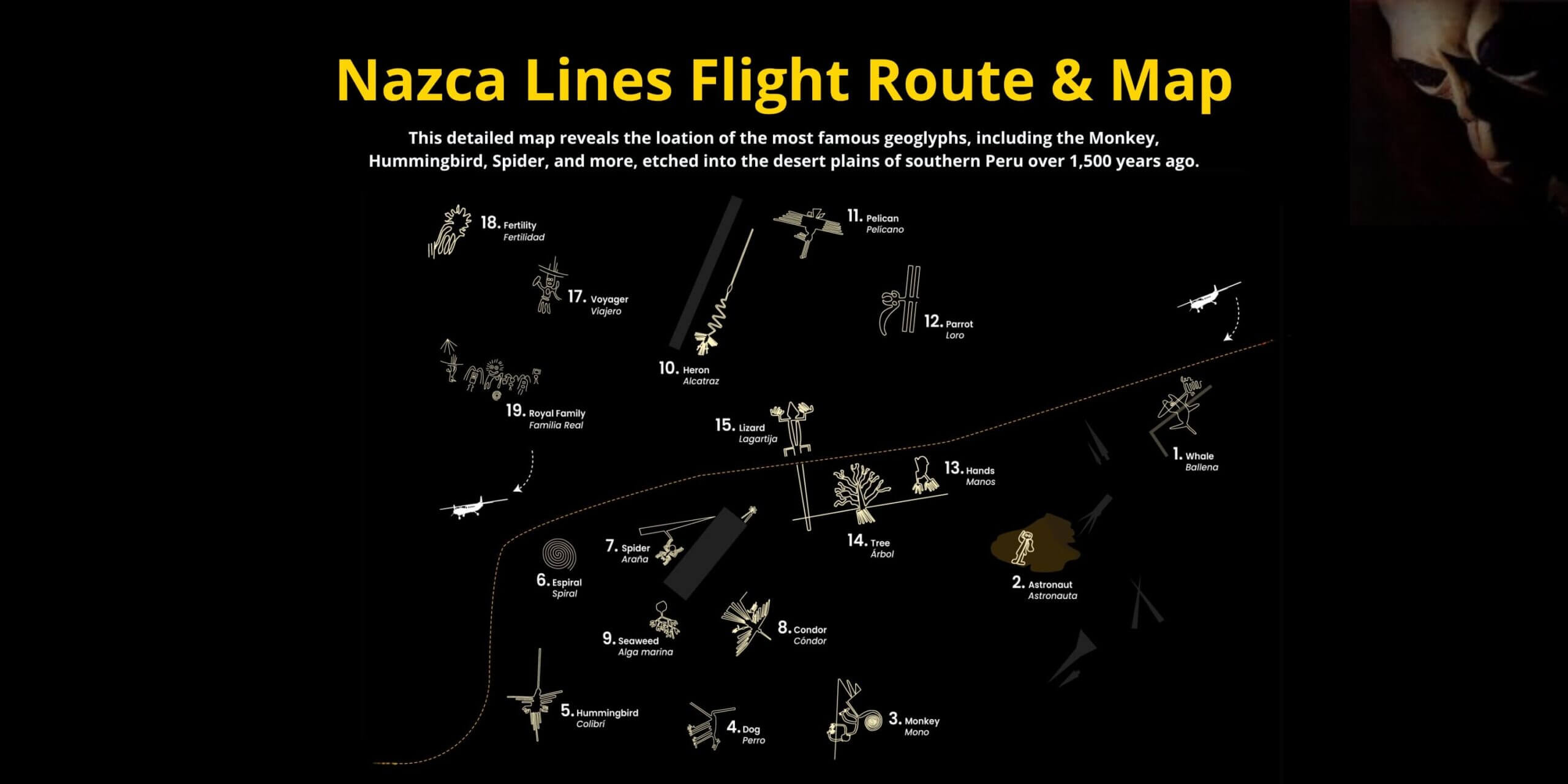
The most famous Nazca figures
Out of all those designs, a dozen or so steal the show. These are the ones on the tickets, the souvenirs and the pilots' route. Sizes are approximate, since measurements vary a little depending on the source.
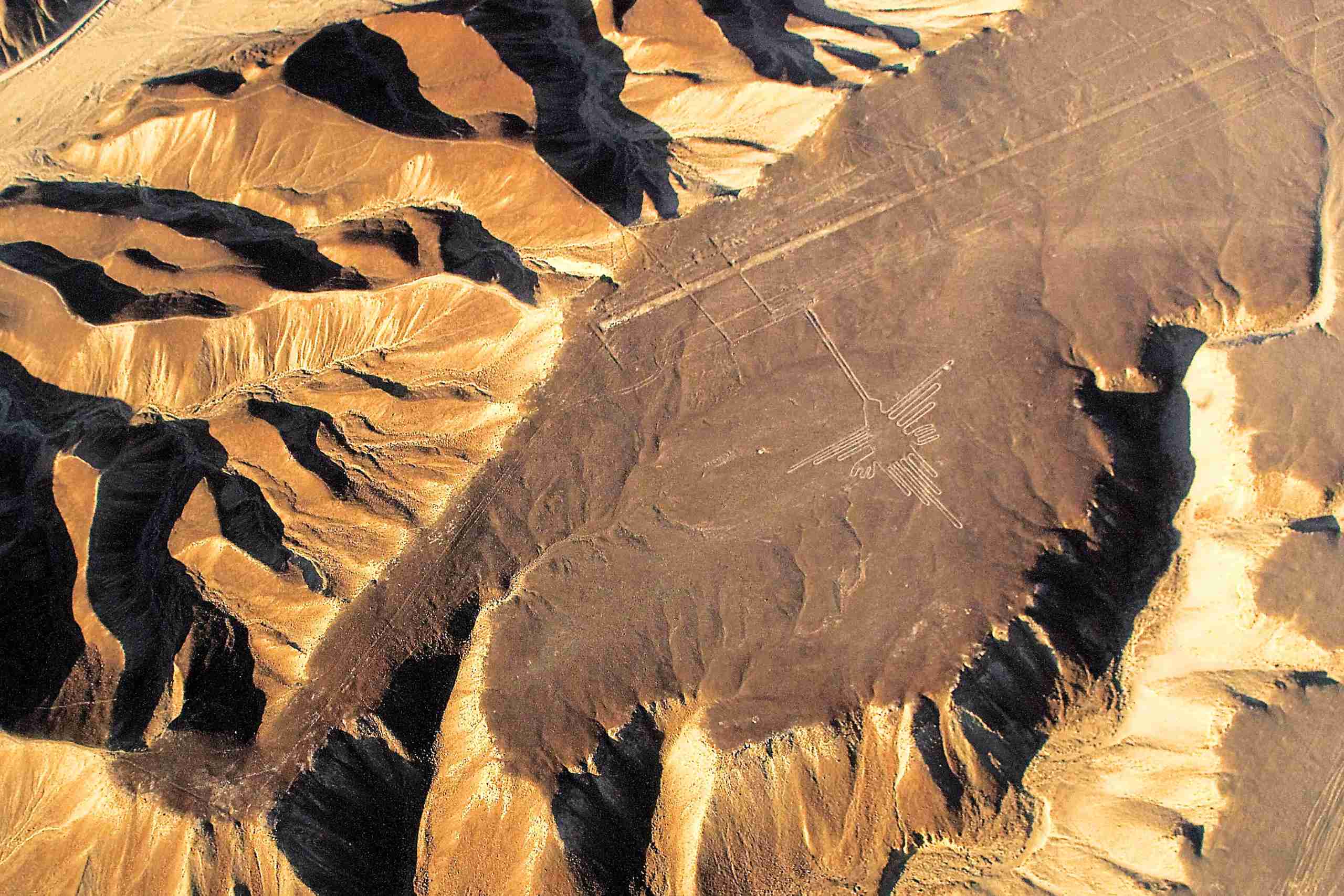
The Hummingbird
The star of the desert and the image most people picture when they hear "Nazca". Its wingspan is close to 70 metres and its long beak points toward a straight line. From the air it looks almost drawn with a ruler.
The Monkey
Our passengers' favourite. It has a spiral tail and one hand with only four fingers (the other has five), and it is surrounded by zigzag lines. It is one of the largest animal figures on the plain.
The Spider
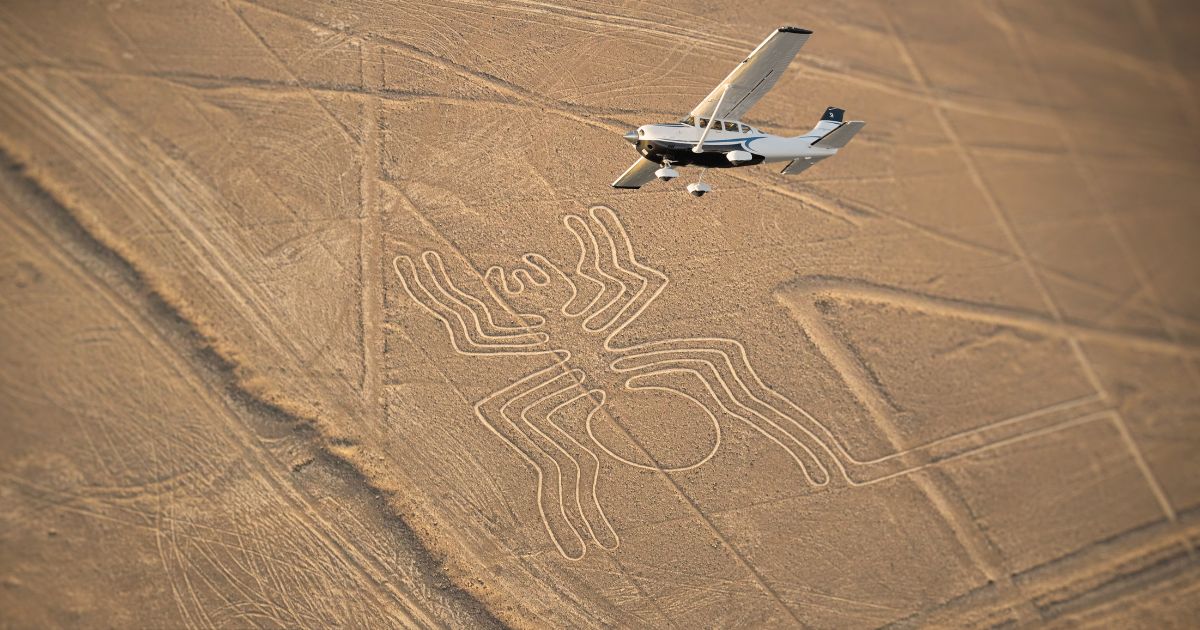
Around 45 metres long and one of the most precise figures in the desert. Some researchers link it to a type of spider found in the Amazon, which says a lot about how far Nazca ideas travelled.
The Condor
A huge bird with open wings, well over 100 metres from wingtip to wingtip. It is a symbol of the Andes, which makes its place on a coastal desert even more interesting.
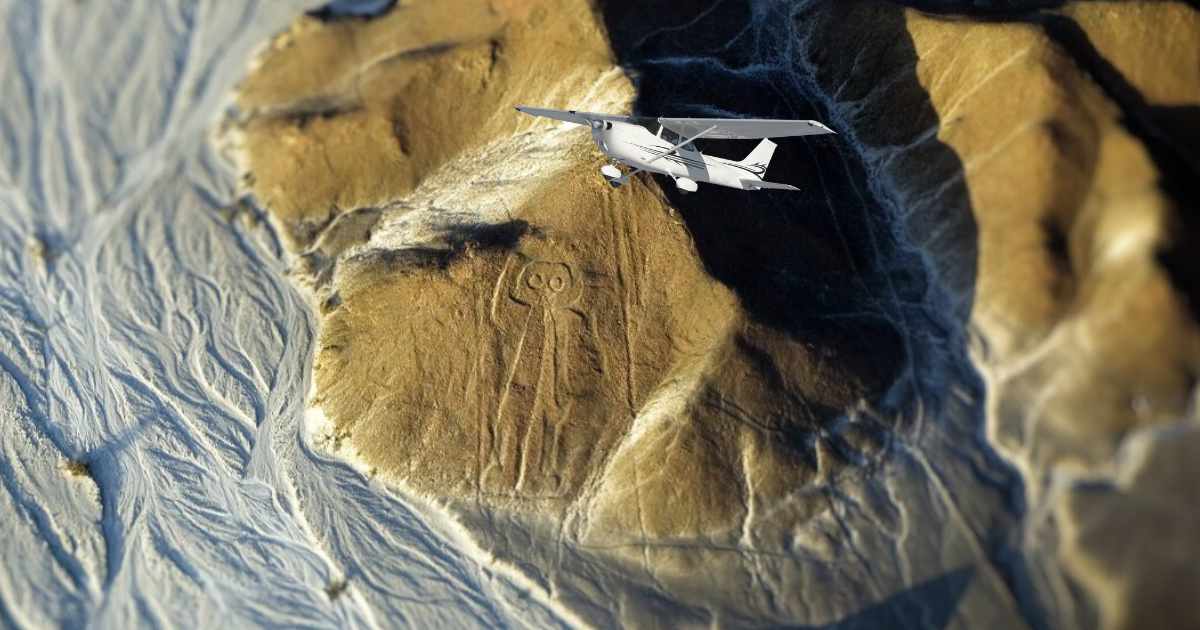
The Astronaut
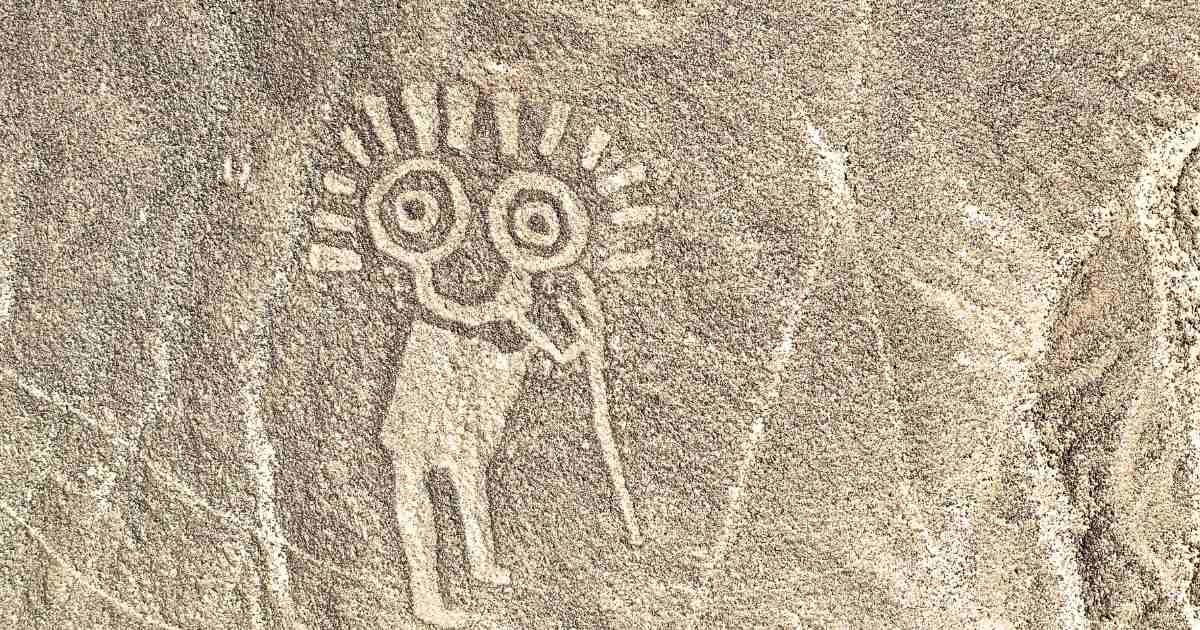
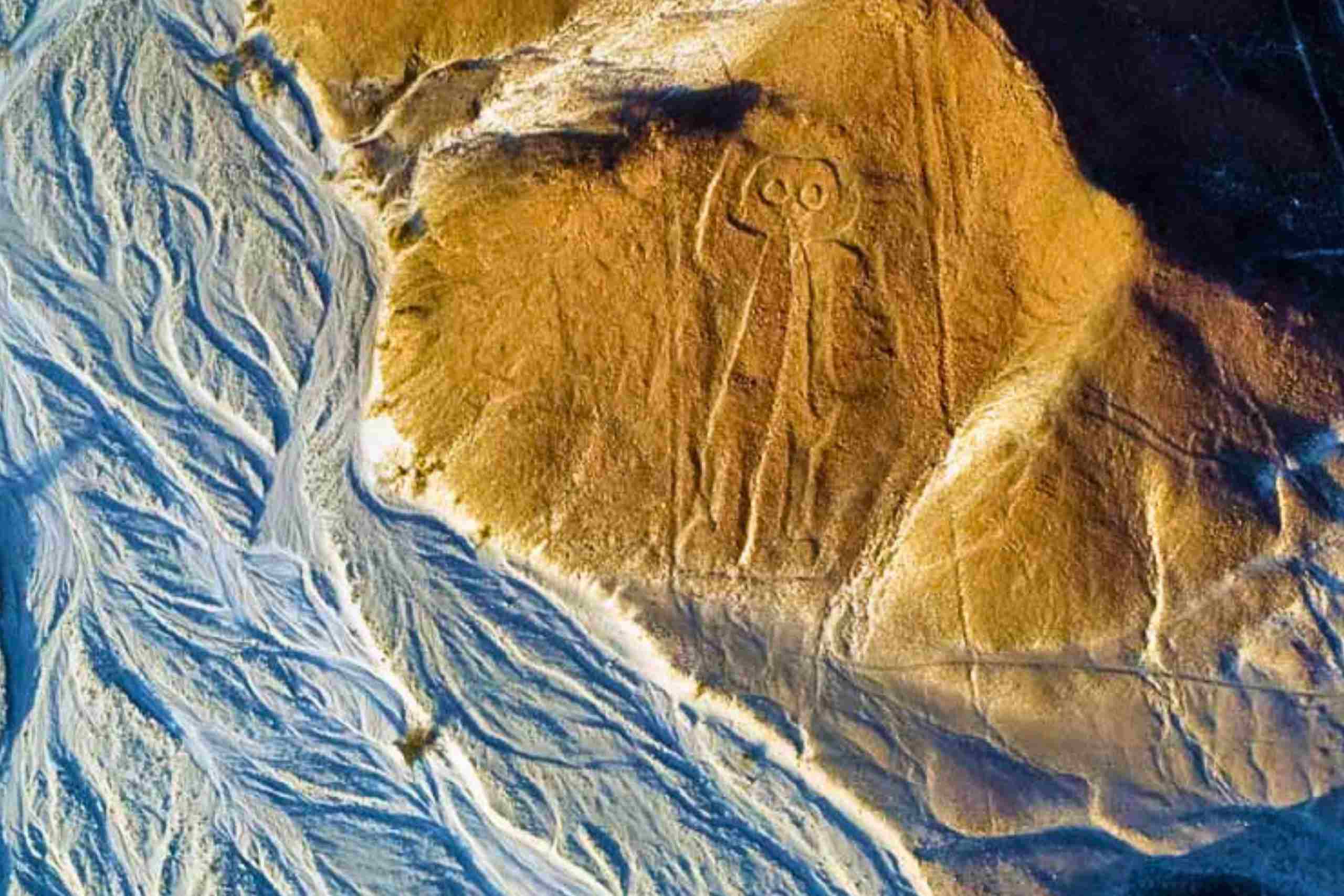
Also called the Owl Man. Unlike most figures, it is drawn on the slope of a hill, with a round head and big eyes looking straight at you. It is about 30 metres tall and gets a lot of theories, most of them more fun than scientific.
The Whale
Usually the first figure on the flight route, so it is a good warm up for your eyes. Many researchers read it as a killer whale, an animal the Nazca also painted on their pottery.
The Dog, the Hands and the Tree
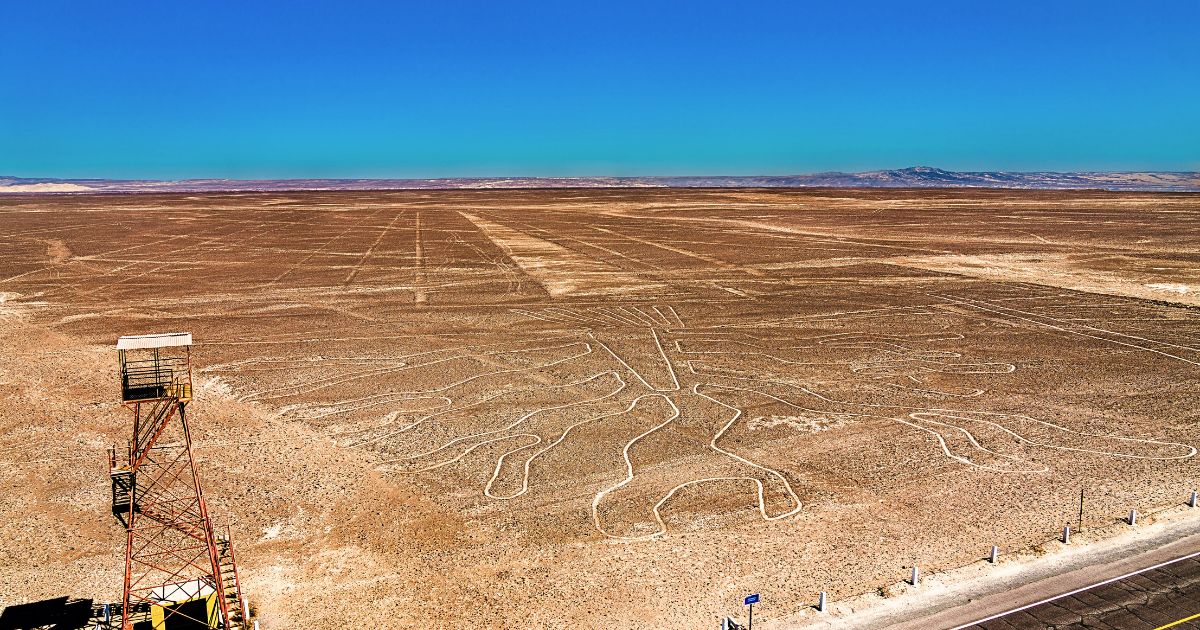
The Dog has long legs and a tail pointing up. The Hands is a strange figure with one normal hand and one with four fingers. The Tree, a plant with roots and branches, sits right next to the Hands beside the Pan-American Highway, which is why both can also be seen from the ground.
The Heron, the Pelican, the Parrot and the Spiral
The Heron (called Alcatraz in Spanish) is one of the longest figures, with a neck that zigzags for hundreds of metres. The Pelican and the Parrot are harder to see and depend a lot on the light. The Spiral is simple but beautiful, a perfect coil in the middle of a web of lines.
Which figures you see on the flight
The standard flight from Nazca airport lasts about 35 minutes and covers the main circuit. On a normal day that means the Whale, the Astronaut, the Monkey, the Dog, the Hummingbird, the Condor, the Spider, the Spiral, the Heron, the Parrot, the Hands and the Tree, plus plenty of trapezoids and long lines in between.
The pilot tilts the plane to the right and then to the left over each figure, so both sides of the cabin get the same view. Every seat is a window seat. Visibility depends on the morning haze, but on clear days you will spot a dozen figures without much effort.
Nazca Lines Flight from Nazca Airport
The classic 35 minute circuit over the Hummingbird, the Monkey, the Spider and the rest of the famous figures.
FromUS$ 100per person
See detailsComing from the coast instead? The flights from Ica and Pisco follow the same main circuit and add the trip over the desert, which is a nice bonus. If you are still deciding how to fit Nazca into your trip, our guide on why the Nazca Lines are worth the trip covers the logistics.
Palpa: the older lines next door
About an hour north of Nazca by road, the Palpa Valley holds its own collection of geoglyphs. Many of them are older than the Nazca Lines and are linked to the Paracas culture that lived in the region before the Nazca.
The big difference is the style. In Palpa most figures are drawn on the sides of hills, and many of them are human. The best known group is often called the Royal Family or Paracas Family: a row of people with round heads and rays coming out of them, as if they were wearing crowns. There is also a large killer whale on a hilltop and some impressive trapezoids.
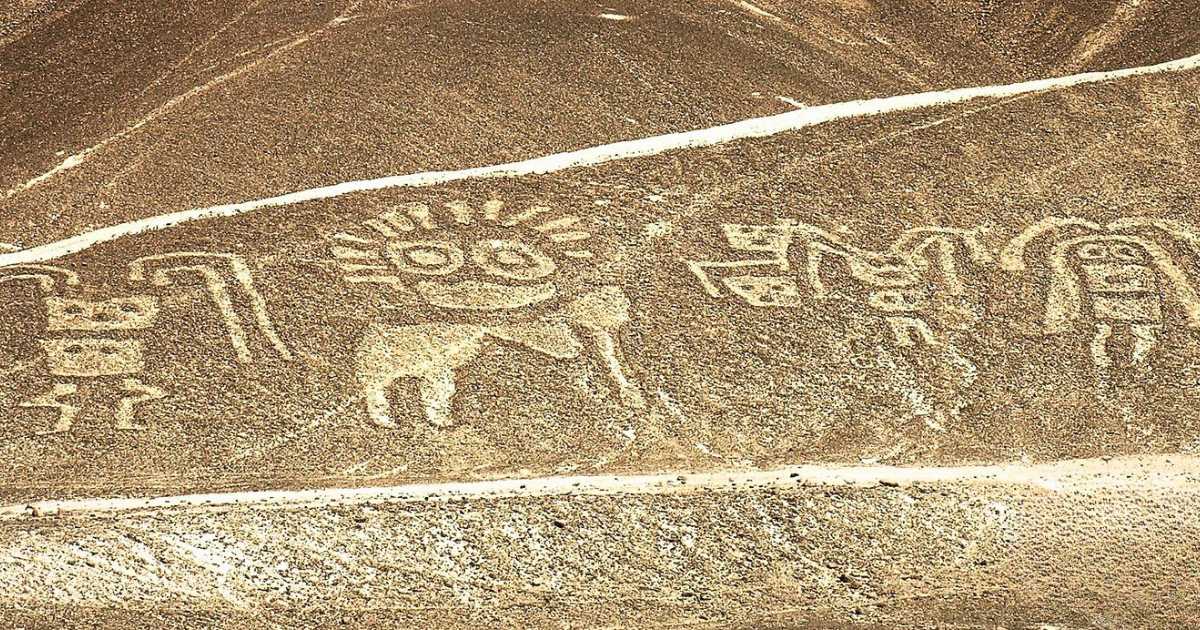
Palpa gets far fewer visitors, so it feels quieter and more personal. Our Palpa Lines Flight focuses on these hillside figures, and the private flight combines Nazca and Palpa in about an hour for your group only.
See the human figures of Palpa up close, older than the Nazca Lines and far less crowded.
FromUS$ 130per person
See detailsSeeing the lines from the ground: the lookout tower
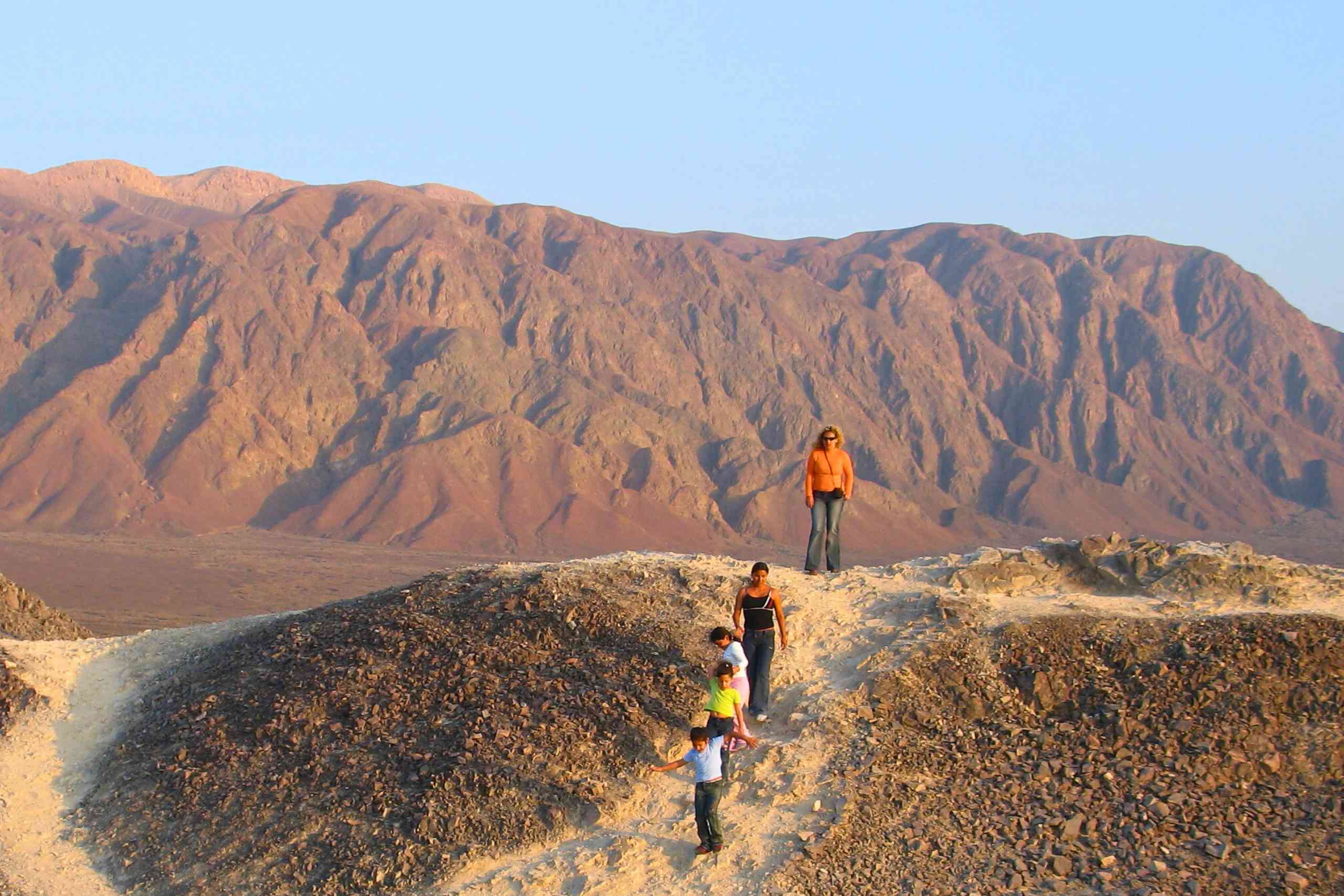
Not up for a small plane? There is a metal lookout tower (mirador) next to the Pan-American Highway, about 25 kilometres north of Nazca town. From the top you get a good view of the Tree and the Hands, plus a few lines crossing the plain.
It is a nice stop, but keep your expectations real. From the tower you see two figures, and from the air you see a dozen or more. That is why most people do both: the tower for context, the flight for the full picture.
Short on time and starting in Lima? The Nazca Lines Full Day Tour from Lima handles the road trip and the flight from Nazca in one long day, so you do not need to sort out buses and transfers yourself.
Nazca Lines Full Day Tour from Lima
Leave Lima at dawn, drive south along the Pacific coast to Nazca Airport, soar over all the major geoglyphs, and return to Lima by evening. All transport included.
FromUS$ 375per person
See detailsPlanning your visit
A few practical things help you see more figures:
- Fly in the morning. The air is calmer and the light is sharper, which makes the lines stand out.
- Eat light. The pilot banks the plane a lot. A light breakfast (or none) makes the ride more comfortable.
- Bring your passport. You need it to check in for the flight.
- Budget for fees. The airport tax and tourist ticket are paid at the aerodrome and are listed on each flight page.
- Pick your season. The desert is dry all year, but haze and wind change the view. Our guide to the best time to visit Peru breaks it down month by month.
Nazca also works well with the rest of the south coast. You can add the desert oasis in our Huacachina guide or the sea lions and cliffs in our Paracas beaches guide. All our flights are listed on the home page.
Frequently asked questions
How many Nazca Lines are there in total?
There is no fixed number. The desert holds hundreds of straight lines (over a thousand counting the short ones), hundreds of geometric shapes and around 70 classic figures. In 2024 researchers announced more than 300 new small figures, and the count keeps growing.
Which Nazca Lines figures can you see from the plane?
On the standard 35 minute flight from Nazca you usually see the Whale, the Astronaut, the Monkey, the Dog, the Hummingbird, the Condor, the Spider, the Spiral, the Heron, the Parrot, the Hands and the Tree.
What is the biggest Nazca Lines figure?
Among the famous figures, the Heron (Alcatraz) is one of the longest, stretching for a few hundred metres. Some straight lines and trapezoids are much bigger, reaching several kilometres in length.
Are the Palpa Lines different from the Nazca Lines?
Yes. Many Palpa geoglyphs are older, linked to the Paracas culture, and are drawn on hillsides. You can see them on the Palpa Lines Flight or combine both areas on the private flight.
Can you see the Nazca Lines without flying?
Partly. The lookout tower on the Pan-American Highway shows the Tree and the Hands. To see the Hummingbird, the Monkey and the rest, you need to fly.